

STRUCTURE

. . .
HOME
KUNCI LISTENING 21
  1. Focus on The Last Dialogue   2. Choose Answers with Synonyms   3. Avoid Similar Sounds   4. Draw Conclusions About Who, What, and Where   5. Listen for Who and What In Passives   6. Listen for Who and What With Multiple Nouns   7. Listen for Negative Expressions   8. Listen for Double Negative Expressions   9. Listen for "Almost Negative" Expressions 10. Listen for Negatives With Comparatives 11. Listen for Expressions of Agreement 12. Listen for Expressions of Uncertainty and Suggestion 13. Listen for Emphatic Expressions of Surprise 14. Listen for Wishes 15. Listen for Untrue Conditions 16. Listen for Two and Three Part Verbs 17. Listen for Idioms 18. Strategies of Long Conversation 19. Listen for Answer in Order 20. Strategies of Long Talk 21. Listen for Answer in Order
KUNCI STRUCTURE 60
A. Sentences with One Clause   1. Be sure the sentence has a subject and a verb   2. Be careful of objects of prepositions   3. Be careful of appositives   4. Be careful of present participles   5. Be careful of past participles B. Sentences with Multiple Clauses   6. Use coordinate connectors correctly   7. Use adverb time And cause connectors correctly   8. Use other adverb connectors correctly C. More Sentences with Multiple Clauses   9. Use noun clause connectors correctly 10. Use noun clause connector/subjects correctly 11. Use adjective clause connectors correctly 12. Use adjective clause connector/subjects correctly D. Sentences with Reduced Clauses 13. Use reduced adjective clauses correctly 14. Use reduced adverb clauses correctly E. Sentences with Inverted Subjects and Verbs 15. Invert the subject and verb with question words 16. Invert the subject and verb with place expressions 17. Invert the subject and verb with negatives 18. Invert the subject and verb with conditionals 19. Invert the subject and verb with comparisons F. Problems with Subject/Verb Agreement 20. Make verbs agree after prepositional phrases 21. Make verbs agree after expressions of quantity 22. Make inverted verbs agree 23. Make verbs agree after certain words G. Problems with Parallel Structure 24. Use parallel structure with coordinate conjunctions 25. Use parallel structure with paired conjunctions 26. Use parallel structure with comparisons H. Problems with Comparatives and Superlatives 27. Form comparatives and superlatives correctly 28. Use comparatives and superlatives correctly 29. Use the irregular -er, -er structure correctly I. Problems with the Form of the Verb 30. After have, use the past participle 31. After be, use the present participle or the past participle 32. After will, would, or other modals, use the base form of the verb J. Problems with the Use of the Verb 33. Know when to use the past with the present 34. Use have and had correctly 35. Use the correct tense with time expressions 36. Use the correct tense with will and would K. Problems with Passive Verbs 37. Use the correct form of the passive 38. Recognize active and passive meanings L. Problems with Nouns 39. Use the correct singular or plural noun 40. Distinguish countable and uncountable nouns 41. Recognize irregular plurals of nouns 42. Distinguish the person from the thing M. Problems with Pronouns 43. Distinguish subject and object pronouns 44. Distinguish possessive adjectives and pronouns 45. Check pronoun reference for agreement N. Problems with Adjectives and Adverbs 46. Use basic adjectives and adverbs correctly 47. Use adjectives after linking verbs 48. Position adjectives and adverbs correctly O. More Problems with Adjectives 49. Recognize -ly adjectives 50. Use predicate adjectives correctly 51. Use -ed and -ing adjectives correctly P. Problems with Articles 52. Use articles with singular nouns 53. Distinguish a and an 54. Make articles agree with nouns 55. Distinguish specific and general ideas Q. Problems with Prepositions 56. Recognize incorrect prepositions 57. Recognize when prepositions have been omitted R. Problems with Usage 58. Distinguish make and do 59. Distinguish like, alike, and unlike 60. Distinguish other, another, and others
KUNCI READING 13
A. Question about the Ideas of the Passage   1. Answer Main Idea Questions Correctly   2. Recognize The Organization of Ideas B. Directly Answered Questions   3. Answer Stated Detail Questions Correctly   4. Find "unstated" Details   5. Find Pronouns Referents C. Vocabulary Questions   6. Answer Implied Detail Questions Correctly   7. Answer Transition Questions Correctly D. Vocabulary Questions   8. Find Definitions From Structural Clues   9. Determine Meanings From Word Parts 10. Use Context to Determine Meanings of Difficult Words 11. Use Context to Determine Meanings of Simple Words E. Overall Review Questions 12. Determine Where Specific Information Is Found 13. Use Context to Determine Meanings of Simple Words
PRAKTIK TES 5
    1. Practice One     2. Practice Two     3. Practice Three     4. Practice Four     5. Practice Five
STATISTIC 4
    1. Statistic Listening     2. Statistic Structure     3. Statistic Reading     4. Statistic Practice
INTERMEZZO 1
    1. Intermezzo
APPENDIX 9
    1. Irregular Verb     2. Idiomatic Expression     3. Preposition     4. Word Prefix     5. Word Suffix     6. Word Part     7. Tenses     8. TOEFL Words     9. Similar Sound
INFO TOEFL 8
    1. Tempat Tes TOEFL     2. Jenis Tes TOEFL     3. Strategi Tes TOEFL     4. Tips Tes TOEFL     5. Persyaratan TOEFL     6. Registrasi Tes TOEFL     7. Manfaat Tes TOEFL     8. Sertifikat TOEFL
Close Exit

Share to Your Friends

Facebook Twitter Whatsup Instagram SMS All Other

Follow Us On

Facebook Twitter Pinterest Instagram Google Plus Youtube Linkedin

On The Website

www.geniustoefl.com www.geniusedukasi.com

® Genius TOEFL © Genius Edukasi

Kunci Rahasia 10Close

Use noun clause connector/subjects correctly
Gunakan Secara Tepat Konektor Noun Clause yang Berfungsi Sebagai Subjek
Pada kunci 9, sudah kita pelajari bahwa noun clause connector berfungsi sebagai kata penghubung. Dalam kunci 10 ini, kita akan mempelajari bahwa kata penghubung noun clause tidak hanya berfungsi sebagai connector, tapi juga dapat sekaligus menjadi subjek dari noun klausa.
  1. You do not know what is in the box. (Kamu tidak mengetahui apa yang ada di kotak itu).
    (Noun Clause sebagai Subject dari Verb)
  2. We are concerned about who will do the work. (Kami risau tentang siapa yang akan melakukan pekerjaan itu).
    Noun Clause sebagai Subject dari Preposition)
  3. Whoever is coming to the party must bring a gift. (Siapapun yang datang ke pesta itu harus membawa sebuah kado).
    (Noun Clause sebagai Subject)
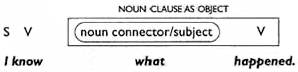
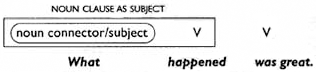
Pada contoh No.1, terdapat dua klausa, You do not know dan what is in the box. Kedua klausa ini dihubungkan oleh connector (kata penghubung) what. Perlu diketahui dalam kalimat ini connector 'what' memunyai dua peran: sebagai subjek dari verb 'is' dan sebagai connector yang menghubungkan kedua klausa.
Pada contoh No.2, terdapat dua klausa. Pada klausa pertama, we merupakan subjek dari are. Pada klausa kedua, who merupakan subjek dari will do. Who juga berfungsi sebagai connector yang menghubungkan antara kedua klausa tersebut. Noun clause who will do the work berfungsi sebagai objek dari preposisi about.
Pada contoh No.3, juga terdapat dua klausa: whoever sebagai subjek dari is coming. Whoever is coming to the party merupakan subjek dari must bring. Kata connector 'whoever' berfungsi sebagai subjek dari kata kerja is coming dan juga sebagai connector yang menghubungkan kedua klausa tersebut. Perhatikan contoh berikut, bagaimana pola kalimat ini diujikan dalam tes TOEFL.

______ was on television made me angry (di televise membuatku marah)
(A) It
(B) The story
(C) What
(D) When
Dapat segera diketahui bahwa kalimat di atas memunyai 2 verb (was dan made) dan setiap verb butuh subjek. Jawaban (A) dan (B), karena subjek 'It' dan 'the story' tidak bisa menjadi subjek dari 2 verb (was dan made) sekaligus. Jawaban (D) jelas salah, karena when bukanlah sebuah subjek. Pada jawaban (C) kata what dapat berfungsi sebagai subjek dari was dan juga sebagai connector kedua klausa di atas; noun clause "what was on television" merupakan subjek dari verb "made". Karenanya, jawaban terbaik yaitu (C), What.

RUMUS KUNCI 10

Perhatikan tabel berikut ini yang berisi penjelasan dan rumus pembentukan noun clause connector/subjects.

NOUN CLAUSE CONNECTOR/SUBJECT
who
whoever
what
whatever
which
whichever

Mari kita mulai latihan dari contoh-contoh berikut ini. Klik "Close"

Close

Rate Us

Jika Anda puas menggunakan Genius TOEFL, beri kami 5 bintang!

Exit App Cancel Rate Us
  Materi Kunci 10
Pembahasan:
Kalimat ini memiliki klausa utama yang belum sempurna "Environmentalists are earnestly trying to determine....". Untuk menyempurnakannya, dibutuhkan kata benda atau objek klausa kata benda untuk verb "to determine". Poin (C) adalah jawaban yang tepat karena berisi klausa kata benda/subjek "what" dan verb "is causing". Sedangkan poin (A) tidak memiliki konektor atau subjek, poin (B) tidak memiliki verb, dan poin (D) tidak memiliki konektor, sehingga ketiganya bukan jawaban yang benar.
Pembahasan:
Kalimat ini memiliki verb utama "is" dan membutuhkan subjek. Klausa kata benda dapat menjadi subjek dari verb "is". Untuk menyempurnakan klausa kata benda subjek, dibutuhkan konektor, subjek, dan verb. Poin (C) adalah jawaban yang tepat karena berisi konektor/subjek "what " dan verb "makes". Sedangkan poin (A) dan (B) tidak memiliki konektor, dan poin (D)memiliki subjek dan verb yang dibalik, sehingga ketiganya bukan jawaban yang benar.
Pembahasan:
Kalimat ini berisi klausa utama "they are unable..." dan klausa keterangan yang belum sempurna "Although seismologists know...", yang membutuhkan objek untuk menyempurnakannya. Klausa kata benda dapat digunakan sebagai objek dari "know", dan klausa kata benda membutuhkan konektor, subjek, dan verb. Poin (A) adalah jawaban yang tepat karena berisi konektor/subjek "what" dan verb "causes". Sedangkan poin (B) dan (D) tidak memiliki verb, dan poin (C) tidak memiliki konektor dan subjek, sehingga ketiganya bukan jawaban yang benar.
Pembahasan:
Kalimat ini memiliki verb utama "is", dan membutuhkan subjek. Klausa kata benda dapat jadi subjek dari verb "is". Klausa kata benda subjek membutuhkan konektor, subjek, dan verb untuk menyempurnakannya. Poin (C) adalah jawaban yang tepat karena berisi konektor/subjek "What" dan verb "produces". Sedangkan poin (A) dan (B) tidak memiliki konektor klausa kata benda, dan poin (D) memiliki subjek dan verb yang dibalik, sehingga ketiganya bukan jawaban yang benar.
Pembahasan:
Walaupun dalam bentuk pertanyaan, kalimat dengan klausa kata benda tetap terdiri dari konektor yang diikuti oleh kalimat sempurna yang berisi subjek dan verb. Jawaban yang tepat adalah (D), what he said.
1  
2  
3  
4  
5  
  Correction  
  Reset  
Next Lesson 11
| |